> For the complete documentation index, see [llms.txt](https://docs.opendatadiscovery.org/llms.txt). Markdown versions of documentation pages are available by appending `.md` to page URLs; this page is available as [Markdown](https://docs.opendatadiscovery.org/~/changes/pcY8r1Ougw5Sv8zDaz8G/developer-guides/api-reference.md).
# API Reference
OpenAPI Specification and Swagger UI
## Overview
This documentation provides a detailed guide on how to visualize and interact with the Open Data Discovery (ODD) API. It covers the usage of the OpenAPI Specification for understanding the API's structure and Swagger UI for testing and interacting with the API endpoints
## OpenAPI Specification
ODD API adheres to the OpenAPI Specification, a standard format used to describe RESTful APIs. This specification outlines the available endpoints, request methods, response codes, and other necessary details to interact with the ODD Platform. Understanding the OpenAPI Specification is key to effectively utilizing the ODD API.
* **Specification Document**: The full OpenAPI Specification for the ODD API can be accessed at [GitHub Repository OpenAPI Specification](https://github.com/opendatadiscovery/odd-platform/blob/main/odd-platform-specification/openapi.yaml).
* **Learning Resource**: For more in-depth knowledge about the OpenAPI, visit the [OpenAPI Resource Guide](https://swagger.io/resources/open-api/).
## Using the Swagger UI
You can utilize the Swagger UI for an interactive experience with the ODD API.
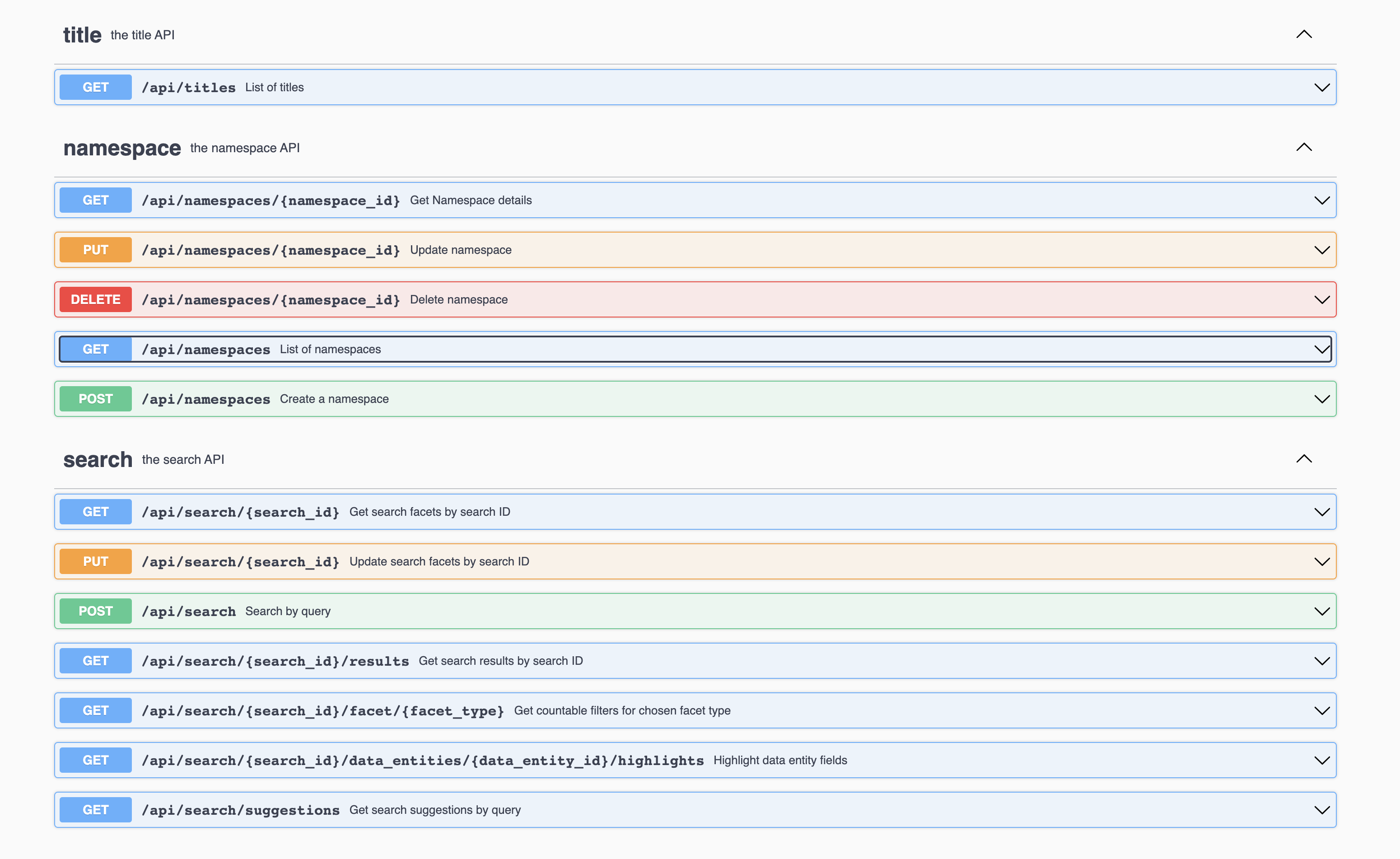
**Swagger UI Access**: The Swagger UI can be accessed on your deployed ODD platform at `{platform-base-url}/api/v3/api-docs`. Additionally, a demo version is available at [ODD Platform Demo Swagger UI](https://demo.oddp.io/api/v3/api-docs).
Sample list of API Endpoints
### **Interacting with the API via Swagger UI**
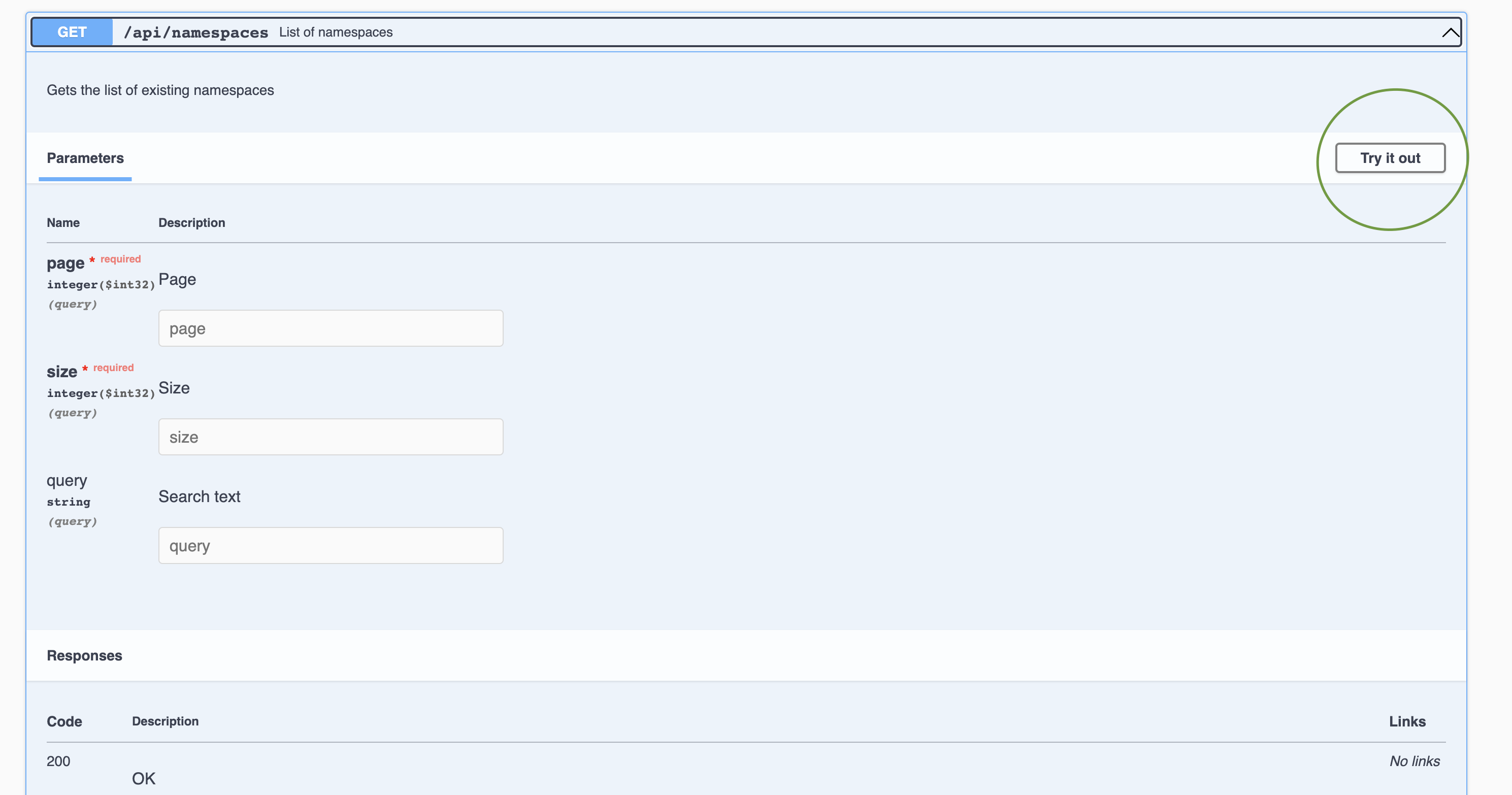
#### **Start a Request**: Navigate to an API endpoint in the Swagger UI and click "Try it out".
Try it out
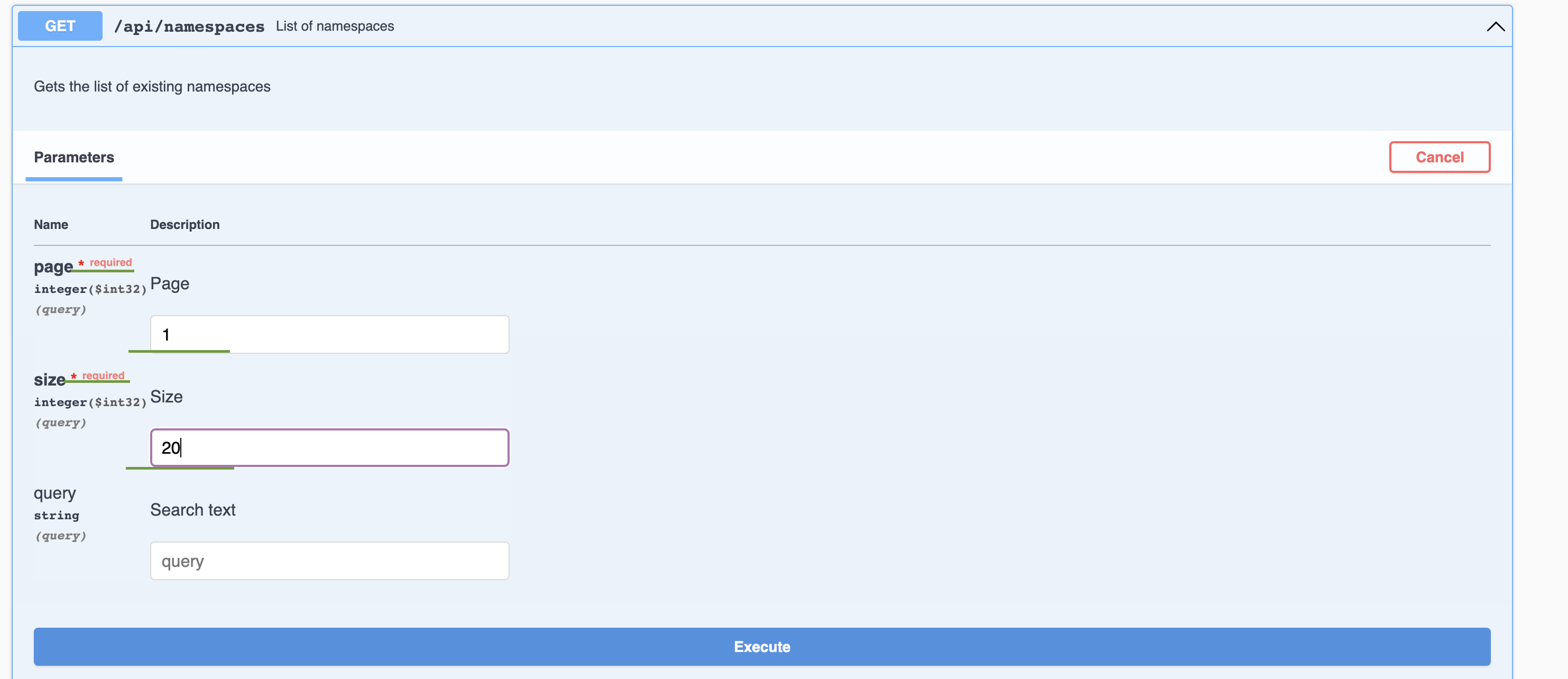
#### **Enter Required Information**: Ensure all mandatory fields (marked with an asterisk \*) are completed.
Filling required fields
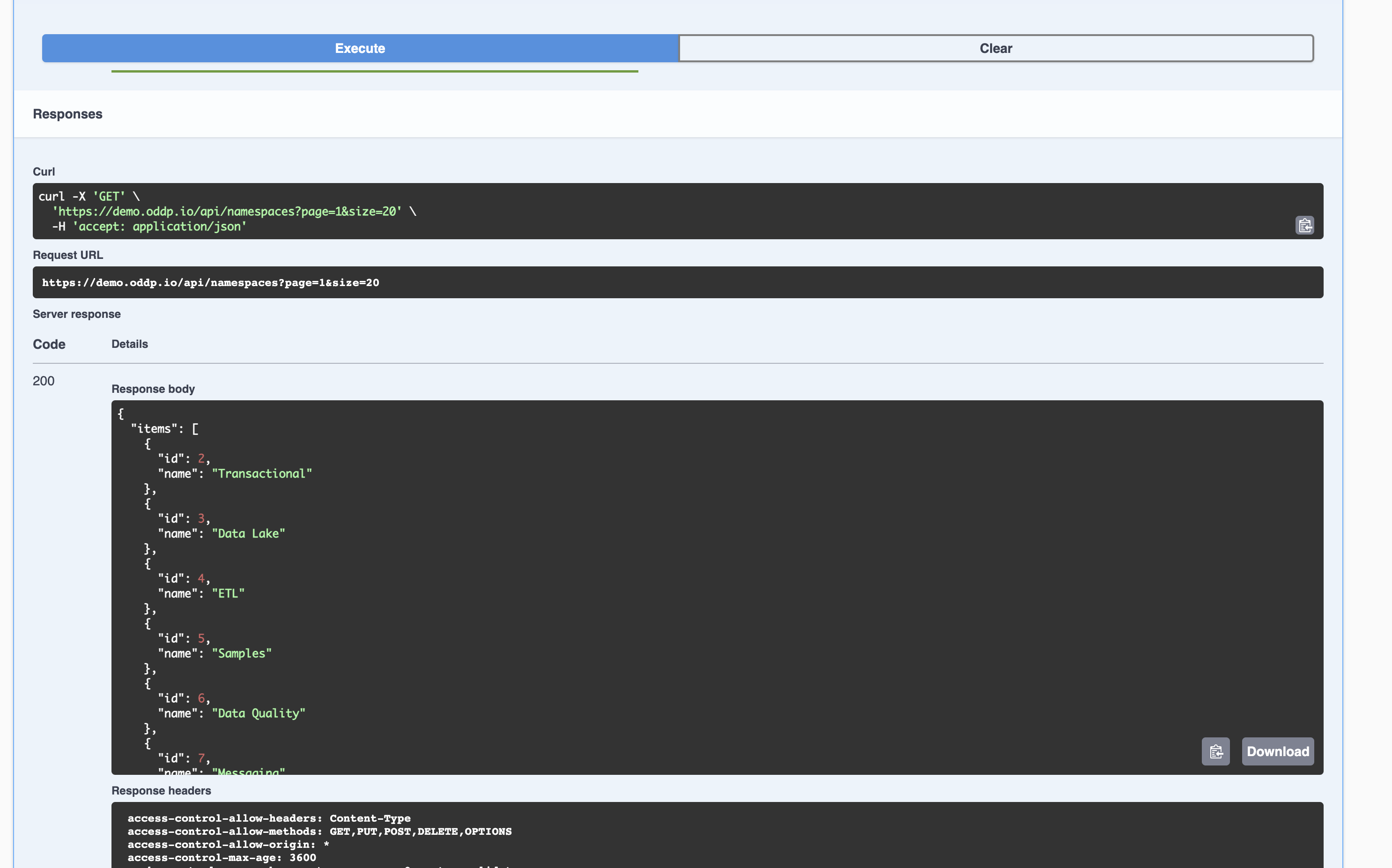
#### **Send the Request**: Click the “Execute” button to submit the request.
Executing API Request
### **Responses in Swagger UI**
* **Response Body**: The API response will be shown in the "Response body" section.
* **Response Codes and Examples**: Examples of response objects for each response code can be found in the "Responses" section.
API Response Example
### **Further Information**
Learn more about how to use Swagger UI with the [Swagger UI documentation](https://swagger.io/tools/swagger-ui/).